
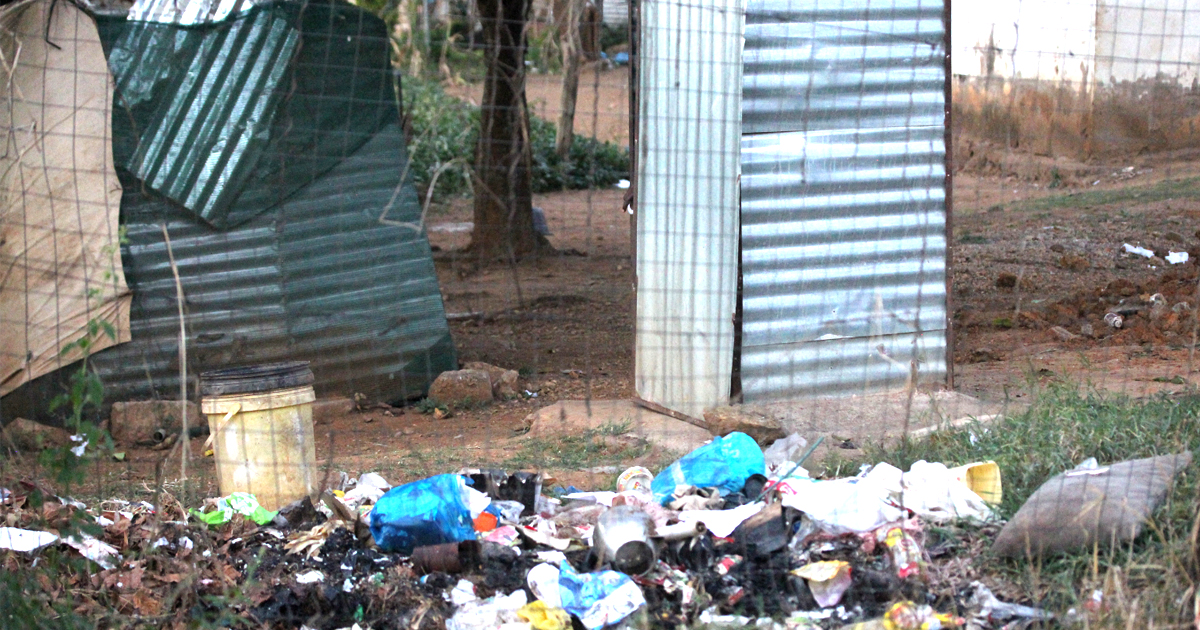
Residents in rural parts of the Makhado Municipality are increasingly concerned about mounting waste in their communities as thousands of households remain without access to formal refuse-removal services.
In villages such as Elim, Madodonga, Nzhelele and Chavani, illegal dumping has become commonplace. Locals fear this could pollute rivers and streams and lead to outbreaks of infectious diseases such as dengue fever or waterborne illnesses such as cholera.
Makhado Municipality includes four formal towns — Louis Trichardt, Vleifontein, Waterval and Dzanani — and more than 200 villages. According to the 2022 Census, it has 140,338 households. In many rural areas, rubbish is dumped in open spaces or burned in backyards.
Without municipal collection services, residents often dig pits to bury and later burn their waste. Others dispose of refuse — including nappies and plastic — in nearby watercourses. Despite commitments outlined in its development plans, the municipality continues to battle with waste management in outlying areas.
In Chavani, municipal trucks only collect rubbish along the main tarred road, bypassing homes. According to the 2024/25–2026/27 Draft Integrated Development Plan (IDP), nearly 69% of rural households rely on their own refuse dumps, while more than 12,500 households have no access to any formal waste-disposal service. The result is widespread dumping along roadsides, in rivers and open fields.
Rose Maluleke, who runs a salon near Elim Shopping Complex in Valdezia, said the problem was affecting local businesses.
"Municipal workers just burn the rubbish instead of removing it. It comes from nearby shops and the smell makes it hard to work. We're asking the municipality to provide large dustbins — this is a health hazard and could drive customers away," she said.
Residents are also concerned that the burning waste releases toxic fumes and pollutants into the air, which may cause respiratory problems such as asthma, bronchitis, lung disease and even cancer.
Desire Matjia from Madabani village said walking to the area's only dustbin, more than two kilometres away, was not feasible. "We dig pits in our yards and burn the waste when they fill up because of the smell," she said.
Harry Netshia, headman of Vari village, said they had repeatedly been promised bins, but nothing had materialised. "The municipal truck has never come to our village. Most of us either burn rubbish in pits or dump it in streams. Disposable nappies are the worst — there's just no support from the municipality," he said.
Responding to questions from Limpopo Mirror, municipal spokesperson Mpho Rathando said efforts were under way to phase out the use of "own refuse dumps" by expanding collection routes and promoting responsible disposal practices. He said the municipality was exploring partnerships to improve waste infrastructure.
To curb illegal dumping, Rathando said the municipality was increasing law enforcement and running monthly environmental awareness and cleanup campaigns.
"All reported illegal dumping sites are cleared within 48 hours," he said.
Designated waste-collection points are also being rolled out to reduce environmental damage. Rathando said the municipality operated the Makhado landfill site and the Dzanani waste-transfer station, while the Vondeling landfill site had been closed and rehabilitated. "No completed waste-disposal facility remains non-operational," he said.
He confirmed that 12,500 households still lack formal refuse collection. "Each year, skip bins are procured and placed in rural villages. Waste is collected weekly according to a structured schedule," said Rathando.