
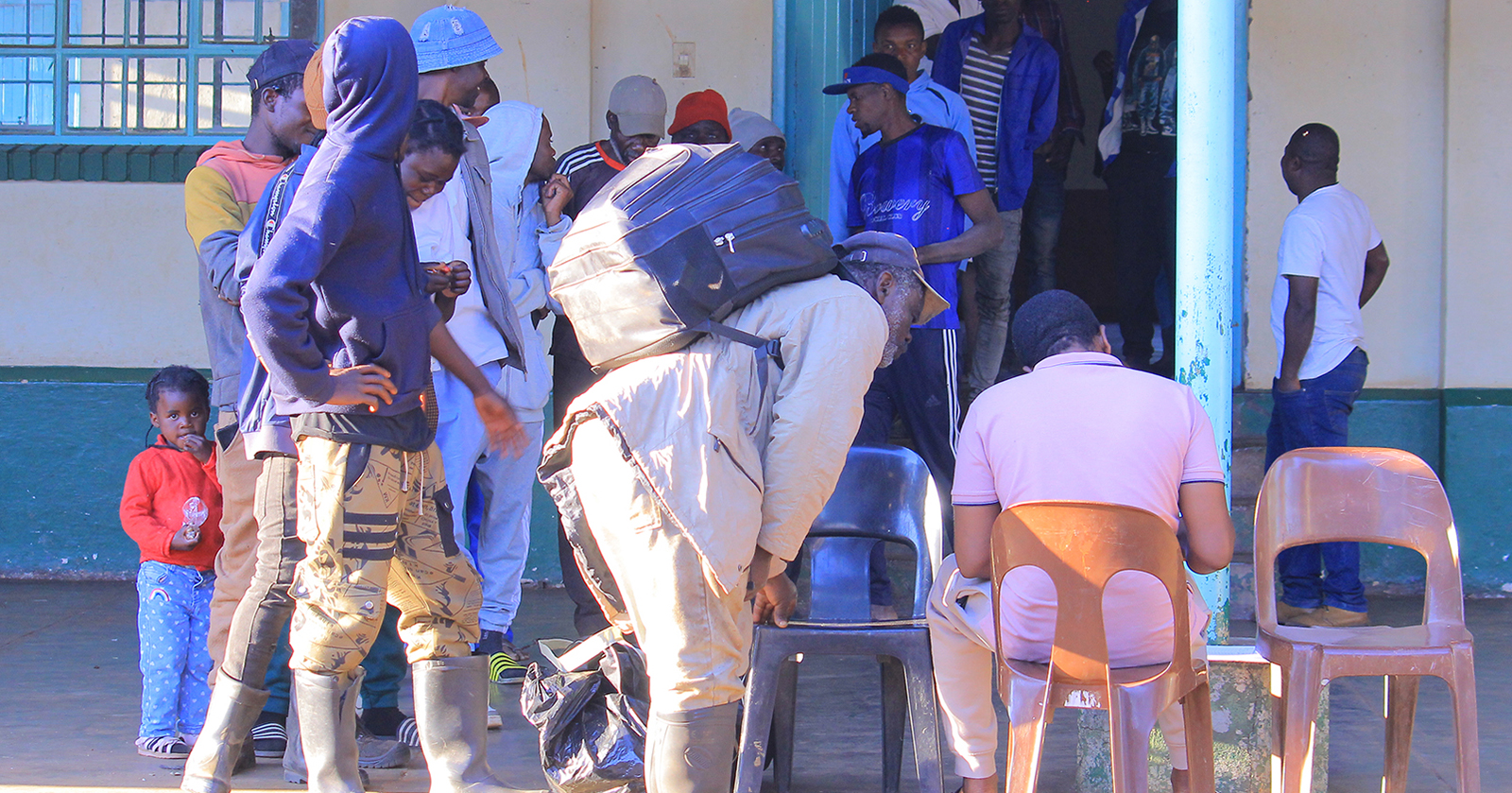
More than 200 undocumented immigrants from Vleifontein and surrounding villages were handed over to police on Sunday after residents from several communities detained them and called the authorities.
Police transported the group to the Louis Trichardt Showgrounds, where officials from the Department of Home Affairs processed them before they were transferred to the Musina Temporary Repatriation Centre for deportation.
The operation involved residents from Vleifontein, Maila and Kanana villages. Residents said the campaign was aimed at removing undocumented immigrants while preventing violence against foreign nationals and their businesses.
“I was staying at a church with my three children when a group of people came, kicked open the door to our room and told us we had to leave. We were then bundled into a police van. We had to wait while they went from house to house collecting other immigrants before bringing us to the showgrounds. We were hungry, and the only food we were given was apples,” said 38-year-old Suzen Mashakada from Zimbabwe.
Mashakada said she came to South Africa in 2023 with two of her children and gave birth to her youngest child after arriving in the country.
“I am heartbroken that I was not given an opportunity to collect our belongings, including my children’s clothes. We only have the clothes we are wearing,” she said.
Her passport expired about two years ago, and she said she could not afford to renew it.
“The last time I renewed it, it cost me R4,000. I was working as a domestic worker and was still waiting to receive my June salary,” she said.
Mashakada said her children attended Maila School and were in Grade R, Grade 4 and Grade 6.
“The deadline was too short. At least they should have given us until December to sort out our documents,” she said.
During Limpopo Mirror's visit to the showgrounds, Mwiedward Abudu from Malawi said he had been working as a builder in Johannesburg before moving to Vleifontein last month after hearing that foreigners were no longer welcome.
“I do not have money to go home, so I was told there is free transport to the Musina Temporary Repatriation Centre. I no longer feel safe in South Africa. All I want is to return home and start a new life,” he said.
One of the organisers, Denzel Ncube from Vleifontein, said the campaign was intended to prevent attacks on foreign-owned businesses, particularly Somali-owned shops, while ensuring undocumented immigrants were treated humanely. He said some immigrants had voluntarily handed themselves over after learning they would be repatriated.
“We are ensuring their safety and that their rights are not violated. Even though they are in the country illegally, they are still human beings and should be treated with dignity. Some Zimbabweans told us they have been paying money to remain in South Africa,” he said.
According to Ncube, immigrants were given time to collect their belongings before being taken to the showgrounds, although some household items, including televisions and stoves, were left behind.
Mashakada, however, disputed that account, saying she and her children were not given an opportunity to collect their belongings before they were taken away.
Ncube said the campaign would continue in other villages with the assistance of the police.
The Department of Home Affairs said close to 7,000 foreign nationals had been accommodated at the Musina Showgrounds before being relocated to the temporary repatriation centre established by the Inter-Ministerial Committee on Migration.
Department spokesperson Thulani Mavuso said about 2,000 foreign nationals were being processed each day. Migrants are issued with group travel documents by their embassies, as well as an order to leave the country issued by the Department of Home Affairs, before being repatriated.
Mavuso said delays in processing were largely due to capacity constraints at the Malawian Embassy, which must issue group travel documents. He added that it was difficult to estimate when processing would be completed because the centre continued to receive undocumented migrants from provinces across the country for repatriation.
Vhembe police spokesperson Captain Vuledzani Dathi said the police’s primary responsibility was to maintain public order and ensure the safety of everyone, including those accommodated at the Makhado Showgrounds and other centres.
Responding to allegations that some immigrants were not given an opportunity to collect their belongings, Dathi said: “Those allegations are still not at our disposal, but what we can say is that someone’s belongings can be replaced, but human life cannot. A person must be prioritised when it comes to that.”
Dathi added that working with communities remained key to preventing crime.