
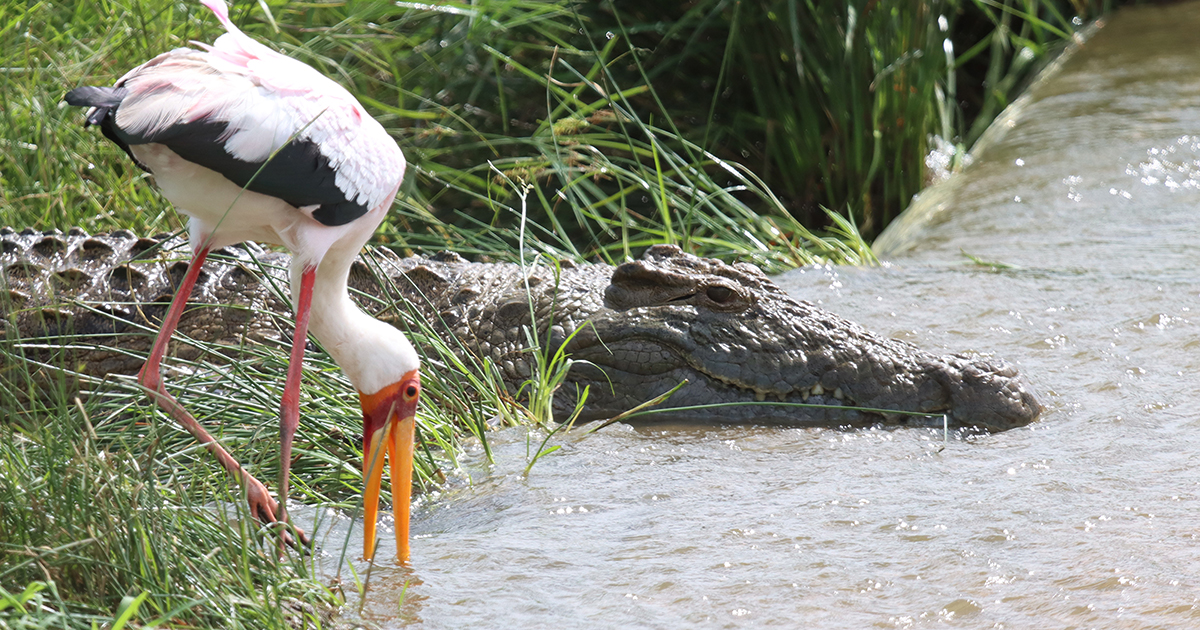
The danger wild animals pose to people in rural villages was tragically highlighted last week when a 50-year-old mother from Halambani Maseroni village was attacked and killed by a crocodile.
The incident happened on Monday, 4 November, as Khaulani Masikhwa went to retrieve fishing nets, accompanied by one of her young children. Community members on the opposite side of the river saw her struggle as a crocodile grabbed her and pulled her underwater. In a desperate attempt to save her, they threw stones into the water, hoping to scare the animal off. Eventually, the crocodile released her body and retreated into deeper water.
Mr Ngodiseni Masikhwa, the deceased's uncle, said the family was devastated by her tragic death. "She didn't have a job, and fishing was sometimes her only way to get food. Losing her like this is unbearable," he said.
Mr Patrick Lambani, chairperson of the Lambani royal family, noted that while this was not the first such incident in the crocodile-infested river, residents continued fishing there because of poverty. "It's heartbreaking to lose another community member. We constantly warn residents against fishing in that river, but they feel driven to take the risk," he said.
Vhembe police spokesperson W/O Vuledzani Dathi confirmed that officers from the Tshaulu Police Station had arrived at the scene to find a crowd along the riverbank, who had then assisted in locating Masikhwa's body. "It is further alleged that community members managed to retrieve the deceased from the water. A police investigation is ongoing," Dathi said.
This incident follows several crocodile attacks in the Vhembe District this year, including the deaths of a 16-year-old girl during a baptism and a fisherman, as well as attacks on two young boys. Zaid Kalla, spokesperson for the Department of Economic Development and Environment, acknowledged the challenge of preventing crocodile-human conflict.
Kalla noted that while the department responded to incidents involving dangerous animals, a 100% solution to prevent crocodile attacks was not feasible. He explained that as human settlements encroached on wildlife habitats, particularly near crocodile-infested rivers and dams, residents and fishermen faced increased risk.
"Heavy rains and flooding can displace crocodiles, leading to more encounters with humans. We will continue educating communities and issuing alerts, noting that climate change, particularly droughts, may drive crocodiles into more populated areas, escalating the conflict," he said.
Dr Jan Myburgh, a toxicology expert from the University of Pretoria's Department of Paraclinical Sciences, explained that crocodile attacks on humans are generally either predatory or defensive. "Attacks occur when large crocodiles are hunting or when humans accidentally provoke them, especially during breeding season from September to November," he said.
Dr Myburgh stressed the importance of precautions, such as using safe water-access points, avoiding known crocodile areas, and, in the event of an attack, fighting back by targeting sensitive areas such as the eyes and nostrils.