
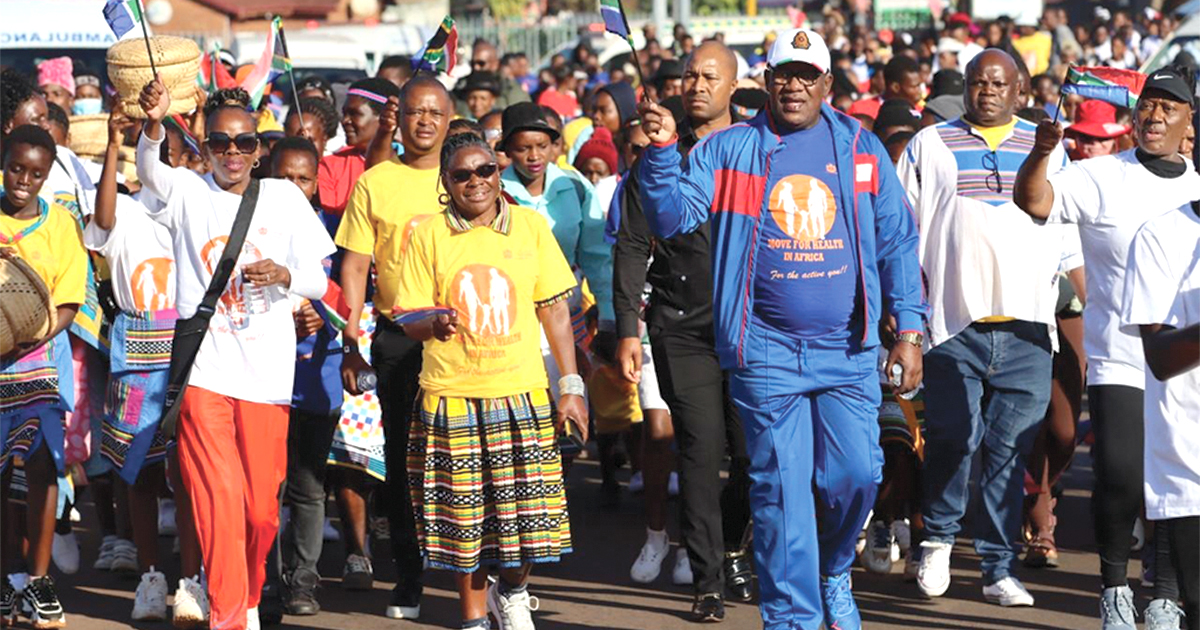
Limpopo Premier, Dr Phophi Ramathuba's address during the Africa Day commemorations, held at the Thohoyandou Town Hall on Sunday, 25 May 2025:
Ndi matsheloni, Thobela, Avuxeni, Good morning, Goeiemôre,
Programme Director, it is with profound excitement and pride that Limpopo joins the rest of the continent in commemorating this auspicious day in Thulamela Local Municipality, a municipality that was named after a significant archaeological site located in the north-eastern side of Limpopo known for its Iron Age stone walled structures.
It is in this golden cradle where the soil once sparkled with gold and iron and where ancient rhythms danced through the marula trees. This is the land not only rich in cultural diversity but also drenched in the memory of kings, queens, merchants and storytellers who etched the soul of Africa into every stone and stream.
This area bears the testimony to Africa's glorious past, her unshakable spirit and her unmatched trade network potential.
This year's Africa Day is commemorated under the theme: "Building Africa We Want Through Solidarity, Equality & Sustainability." This theme underscores the country's commitment to addressing historical injustices such as apartheid, racism and xenophobia among others within the African communities.
Today, we do not just commemorate a date; we awaken the spirit of Africa and in doing so, we recommit to building Africa we want through, solidarity, equality and sustainability.
We pause, to acknowledge Africa's achievements
Programme Director, the question that we are always confronted with is whether it is necessary to commemorate this day. We continue to commemorate this day, founded on 25 May 1963 in Addis Ababa, Ethiopia, as the Organisation of African Unity, now known as the African Union. On this day, we pause to acknowledge Africa's remarkable achievements, reflect on our journey and confront the challenges we still face.
No moment is apt to remind us about the need for building a stronger Africa than the recent global changes that have had a negative bearing on the continent, seeking us to be more united and stronger to withstand all the economic pressures that we now face.
Our liberation is not a solitary tale, but a tapestry woven by countless African nations who stood by us during our darkest hours in a quest to liberate and build the Africa we want. We remember leaders like Julius Nyerere, Kwame Nkurumah, Patrice Lumumba, and Kenneth Kaunda, amongst others, who fought in solidarity for the liberation of our people.
History has no blank pages. These leaders and their countries opened their arms to the exiled, offered sanctuary to our freedom fighters, and carried the torch of Pan-Africanism with unmatched resolve.
Even as our comrades perished in exile, far from their ancestral homes, their dreams remained rooted in African soil. Today, we honour them through the Exile Repatriation Programme, guided by the National Policy on Repatriation and Restitution of Human Remains and Heritage Objects (2021).
This policy affirms our commitment to restoring dignity to our fallen heroes, such as the late Duma Nokwe, former ANC Secretary-General, whose remains were recently returned from Zambia.
Programme Director, Africa Day reminds us of the visionary spirit of our forebears, who established the OAU with a mission: to promote solidarity, encourage trade, support development, resolve conflict and protect the sovereignty of African nations. Today, more than ever, it is our responsibility to bring the vision of the AU to life.
Limpopo opens new frontiers of opportunity
Limpopo, as a gateway to Africa, plays a strategic role in promoting regional economic integration, particularly within the SADC region. Bordering Botswana, Mozambique and Zimbabwe, we serve as a critical hub for trade, investment, and continental cooperation. Through initiatives such as the African Continental Free Trade Area (AfCFTA), we are opening new frontiers of opportunity.
Yet, we must acknowledge the challenges that persist, civil unrest, authoritarian rule, hunger, water scarcity and institutional instability continue to plague parts of our continent. Despite our mineral wealth, Africa still faces underdevelopment, disease and economic marginalisation.
Millions remain displaced, particularly women and children. Malaria, HIV/AIDS, and climate change compound our plight, while poor governance and unequal trade agreements threaten our sovereignty and potential.
Programme Director, on this Africa Day, let us reflect not just on our past but in the future, we are shaping. We are a continent of paradoxes, with abundant resources, but widespread poverty; immense talent, yet limited opportunities. This must change. We are the generation entrusted with the task of rewriting Africa's narrative and addressing historical injustices such as apartheid, racism and xenophobia amongst others within the African communities.
Africa must rise
Africa must no longer be the sleeping giant. Africa must rise to be the breadbasket of the world, a leader in renewable energy, digital innovation and sustainable development. Our continent must transform from dependency to dignity, from aid to trade.
Limpopo contributes to this transformation through its cultural richness and unity in diversity. Ri na Vhavenda, VaTsonga/Machangana, BaPedi, Afrikaners na VhaNdebele vha ne ra dzula murunzini muthihi nga pfano na vhuthihi. This is a living testimony that unity in diversity is not only possible, but it is beautiful and powerful.
To sustain this solidarity, we must:
* Harness our natural resources for beneficiation and sustainable development;
* Promote local industrialization to create jobs;
* Expand Special Economic Zones (SEZs) such as Musina-Makhado and Fetakgomo-Tubatse;
* Empower our farmers with technology and climate-resilient practices;
* Tackle the climate crisis head-on with collective action.
Africa's development agenda must align with continental priorities of strengthening democracy, ending corruption, investing in youth, modernising infrastructure and upholding human rights. We must modernise ports, streamline customs and reduce trade barriers. Let us strengthen intra-African trade and build strong, inclusive economies.
We must also leverage technology, artificial intelligence, e-commerce, and digital banking as tools of liberation, not instruments of inequality. Let us ensure access to quality education, universal healthcare, and clean water for all.
Let Africa's governance be guided by ubuntu, humanity, dignity and justice. Muthu ndi muthu nga vhathu. This is our African ethos. It is the cornerstone of our peace, our democracy, and our solidarity.
Let us celebrate this day with pride. Let us embrace our shared heritage and learn from one another. If we live together in peace and harmony, we can build an Africa that is prosperous, free, and united.
I thank you.