
By Elmon Tshikhudo and Anton van Zyl
The reason why thousands of dead fish surfaced on Nandoni Dam late in December last year remains a mystery. The exact cause may only be determined once laboratories reopen and a proper pathological analysis is conducted on the specimens provided.
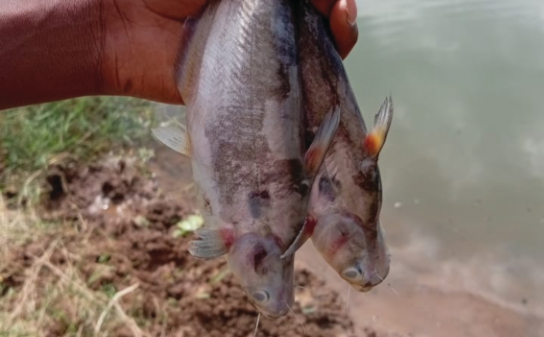
Dead fish floating along the banks of Nandoni Dam and the Luvuvhu River were first spotted on the morning of 19 December by residents of Dididi village. News of the incident quickly spread, prompting local residents to arrive with buckets and rakes, scooping up the dead fish. Some residents immediately prepared the fish for breakfast, while others dried them for future use because of the sheer volume of fish.
Authorities responded swiftly, warning people not to consume the dead fish as it posed a potential health hazard. The Department of Water and Sanitation (DWS) dispatched a team to collect water samples and specimens. However, despite the warnings, residents continued to harvest and distribute the fish.
Community leader Mr Phillip Munyai said they had cautioned residents against eating the fish. "We are glad that many heeded the call, but some continued feasting on them. Another concern was water safety. Most residents avoided drinking the water, suspecting it might be poisoned. We are happy that the Department of Water and Sanitation assured us the water is clean and safe for consumption," he said.
In a statement released by the DWS last week, it was noted that inspections had been carried out on 21 December at the Thohoyandou waste-water treatment plant, three associated waste-water pumps, and several manholes to check for overflows or spillages. None were detected. Further water samples were collected at the Tshitomboni pedestrian bridge on 22 December to test for possible oil contamination after a substance resembling oil particles was observed floating on the river. "Although the substance could be oil from decaying fish, the Department wants to ascertain this in a scientific way," the statement read.
The Department admitted there is still no clarity on the exact cause of the fish deaths. "Water samples were collected at the affected sites and analysed at accredited laboratories, Muratho Laboratory and Capricorn Veterinary Laboratory," said the DWS.
One theory is that the fish died from oxygen depletion in the water. In 2005, hundreds of fish, including catfish, yellowfish, and tilapia, died from oxygen starvation in a pool in the Olifants River in the Kruger National Park. The drop in water levels and the presence of nearly 100 hippos were believed to have caused oxygen depletion in that case.
High temperatures in the Vhembe area over December may also have contributed to the problem. However, preliminary findings from the Department do not provide much clarity. "The preliminary results showed that all water quality parameters, including dissolved oxygen and chemical oxygen demand, were within acceptable limits as per prescribed standards. Therefore, preliminary results indicated no significant water-quality deviations to explain the fish mortality," the DWS stated.
Another puzzling factor is that only one of the five fish species found in the river and dam was affected. Although the Department has not officially identified the fish, it is believed to be makriel, also called silver catfish or butter barbel.
The Department again urged community members not to consume or sell the dead fish as it could pose serious health risks. "The Department remains committed to transparency and will provide further updates as additional test results and findings become available," the statement read.
On Tuesday (7 January), Vhembe District Municipality's executive mayor, Freda Nkondo, visited the dam. "We are here to assure residents that the water from our treatment plant is clean and fit for human consumption. We are also issuing a strong warning to communities not to eat the dead fish as it may pose a danger to their health. Let us wait for the results to determine the cause," she said.