
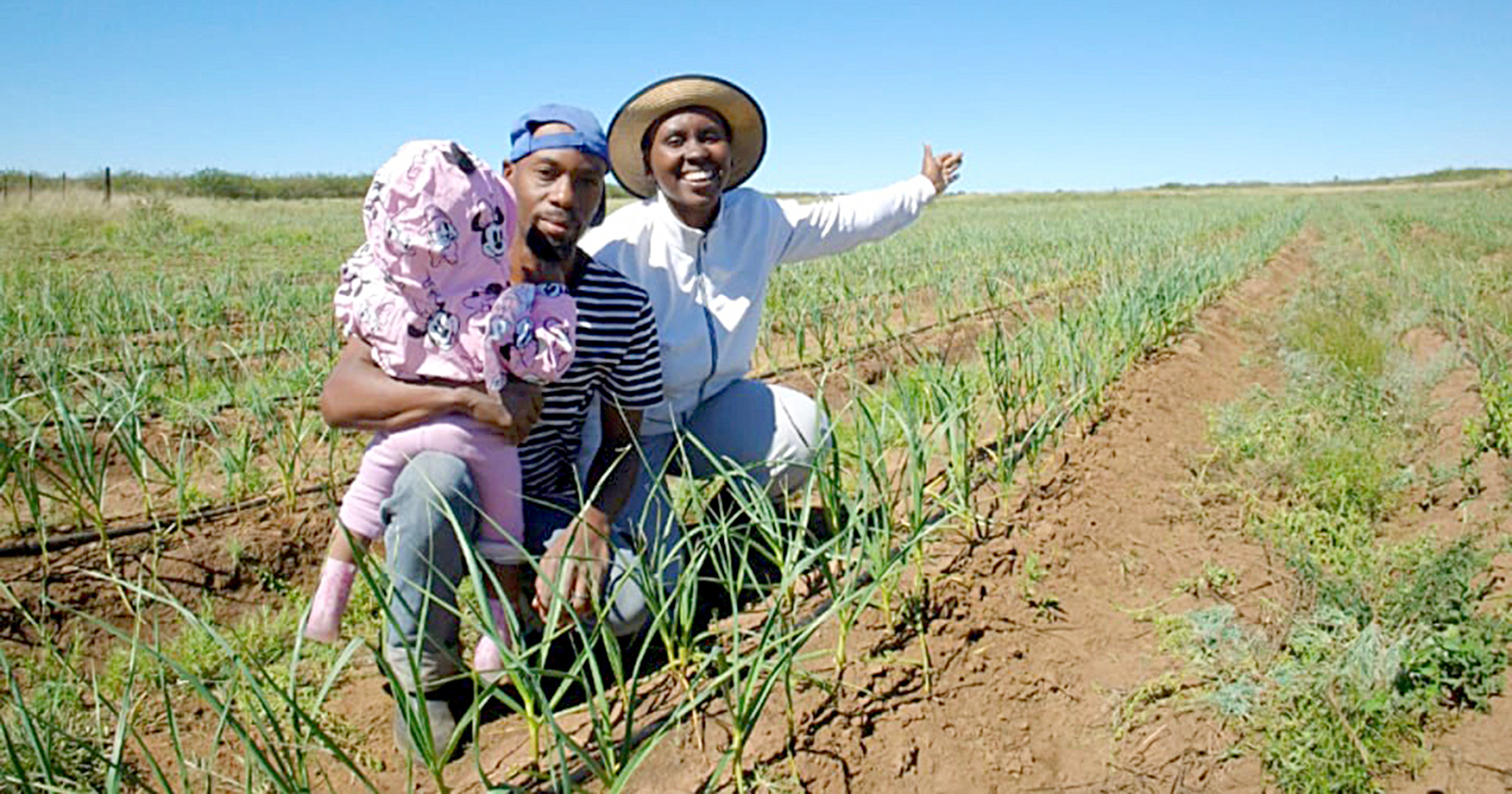
A young couple, Tshisikhawe Maumela (29) and her husband, Nthanyiseni Rodney Maumela (39), are proving that innovation and sustainability can go hand in hand on a small homestead.
Together, they run Pikani Harvest at Rathidili village near Louis Trichardt. Pikani Harvest is a growing agricultural venture that combines organic garlic farming, livestock and an unusual but highly effective Black Soldier Fly (Hermetia illucens) breeding project. While many farmers focus on traditional crops and livestock, the Maumelas have chosen a different path — one aimed at reducing waste, lowering costs and protecting the environment.
“The name Pikani is my maternal grandmother’s name,” Tshisikhawe explained. “We run a farm and produce things that people in farming do not normally produce, like garlic.”
The couple, who have an 18-month-old daughter, started farming shortly after getting married in 2022. What began as a small garden has steadily expanded into a diverse farming operation covering three cultivated hectares on their 15-hectare property.
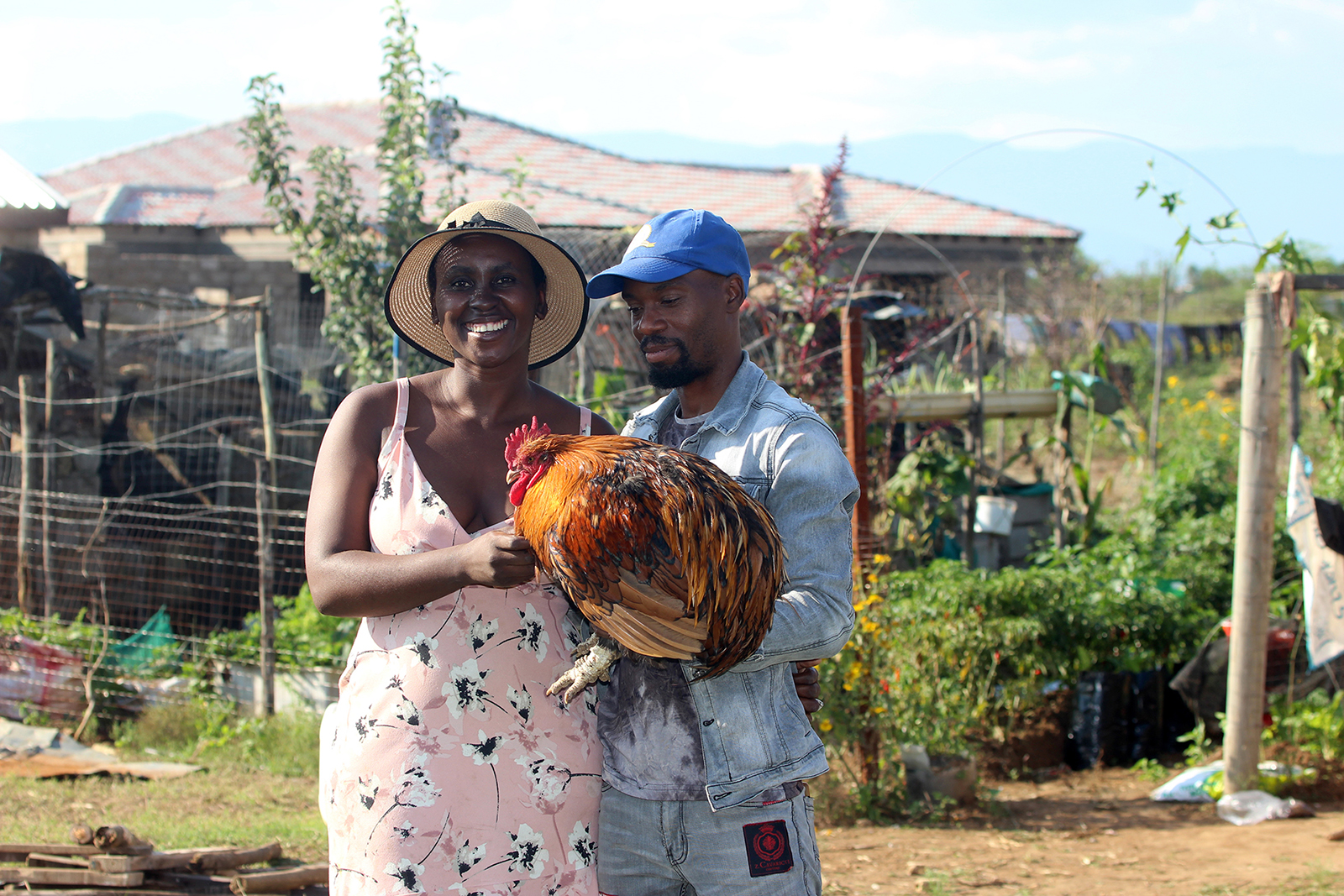
The Maumelas’ small garden at their homestead produces all they need. They are constantly
looking for ways to produce their own food, homestead style, while eliminating as many
costs as possible. Photo: Andries van Zyl.
Pink Egyptian garlic and some useful flies
Pikani Harvest is best known for its organically grown Pink Egyptian garlic, cultivated using manure from the farm’s own cattle, chickens, goats and sheep.
“With garlic, we plant roughly a hectare each year, which we sell across the country,” Tshisikhawe said.
The farm’s sandy loam soil has proven ideal for garlic production, and the couple have spent nearly five years building their agricultural business.
But they quickly realised that diversification was necessary, which sparked new ideas such as breeding flies. The Maumelas started a fish farm and kept tilapia, but quickly discovered that commercial fish feed was expensive and not always readily available.
“We started looking into how we can feed our fish without having to go to the store and buy feed,” Tshisikhawe said. “We said let’s look into something we can do ourselves.”
After researching alternative protein sources such as mealworms and superworms, they eventually discovered Black Soldier Flies.
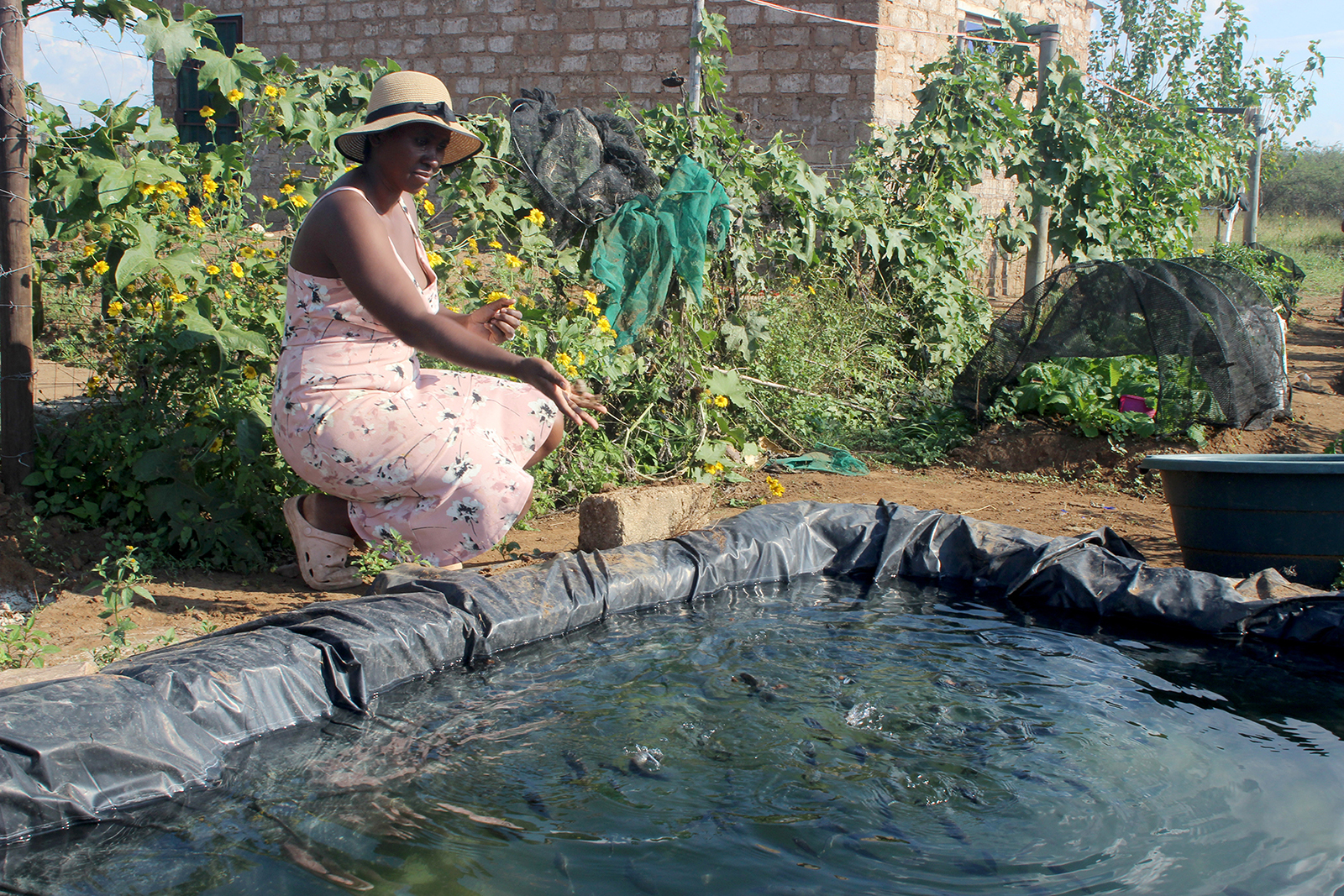
Tshisikhawe has stopped buying expensive fish feed for their tilapia, now feeding them only
dried Black Soldier Fly larvae. Pictured here is Tshisikhawe feeding fish in the pond at their homestead, where they breed tilapia for their own consumption. Photo: Andries van Zyl.
Why Black Soldier Flies matter
Black Soldier Flies are increasingly attracting attention worldwide because of their ability to transform organic waste into valuable resources.
Their larvae consume food scraps, manure and agricultural waste at astonishing speed, producing protein-rich feed suitable for chickens, fish and pigs. The leftover waste material, known as frass, is also an excellent organic fertiliser.
The process helps reduce landfill waste, lowers greenhouse gas emissions, cuts unpleasant odours and creates a circular farming system where very little goes to waste.
“In a 30-day cycle, we are able to get some 50kg of larvae,” Tshisikhawe said.
The project has already made a significant financial difference on the farm.
“We have literally cut down 50% of our fish and chicken feed costs, and the good thing is Black Soldier Flies produce 40% to 60% protein.”
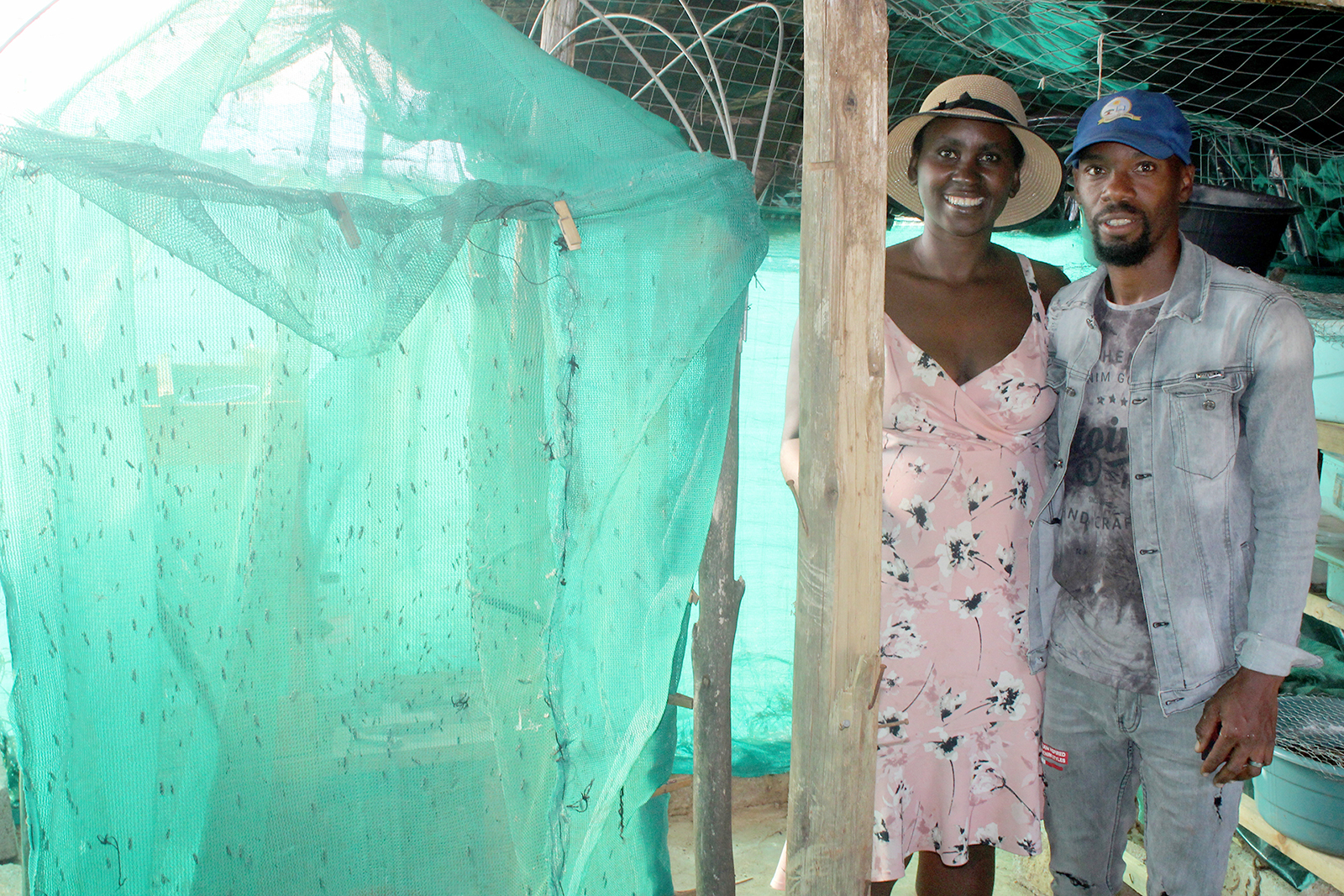
Tshisikhawe and Rodney inside the roofed, plastic-covered enclosure where breeding takes place.
The enclosure was built from materials available on the Maumelas’ homestead. To the left is the
net-covered cage where the adult flies are kept for breeding. Photo: Andries van Zyl.
A small setup with a big impact
Remarkably, the Black Soldier Fly breeding operation occupies only a very small space at the couple’s homestead.
“With Black Soldier Flies, you don’t need a lot of space,” Tshisikhawe explained. “We breed the soldier flies in our backyard at home.”
Inside a plastic-covered enclosure built largely from available materials, the flies are kept in a netted breeding area where they lay thousands of eggs at a time inside recycled cardboard strips.
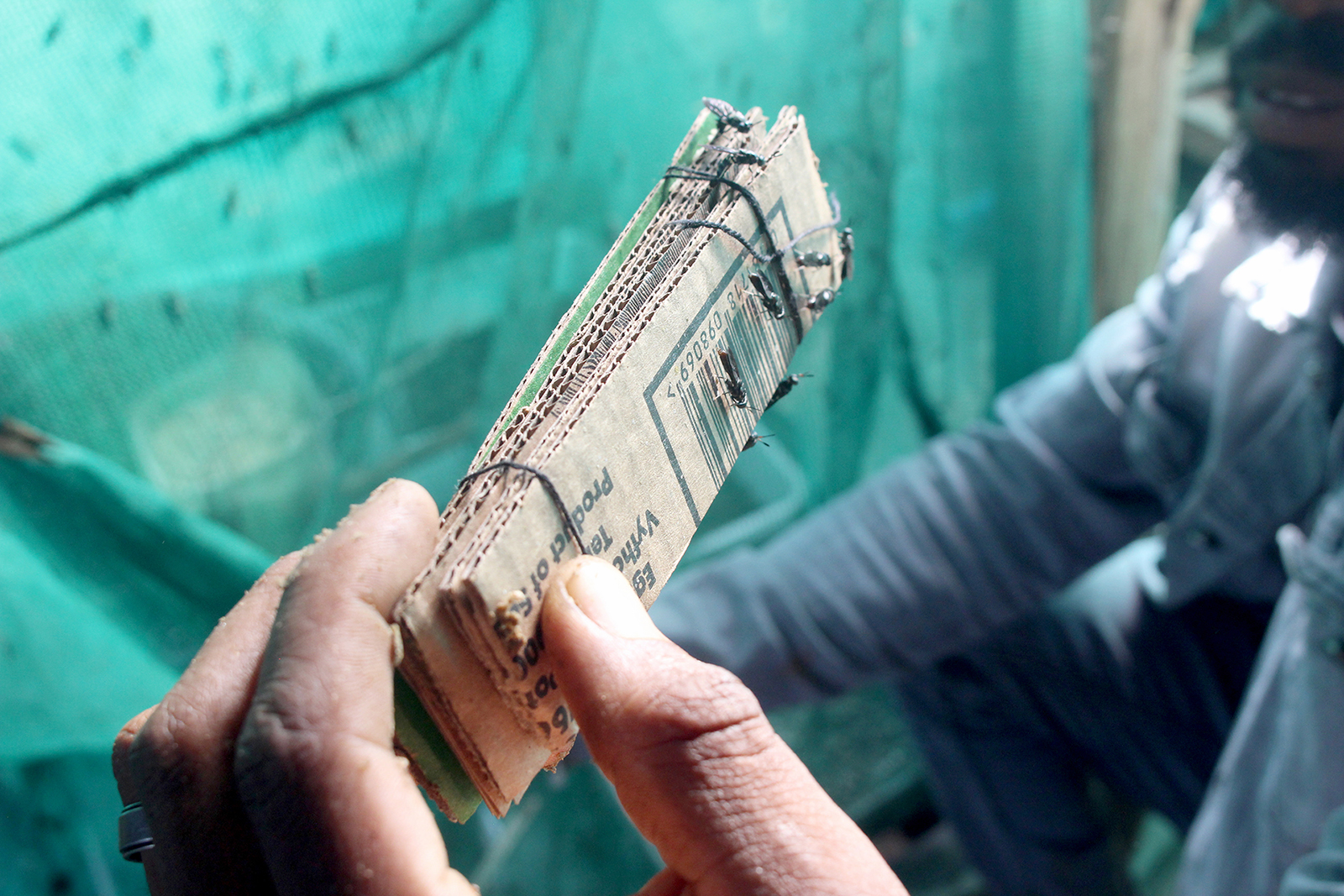
Inside the netted area, the flies are allowed to lay their eggs (thousands at a time) in recycled
cardboard boxes cut into strips and sandwiched together, with the eggs laid in the “air pockets”
between the cardboard layers. Photo: Andries van Zyl.
Once the eggs hatch, the larvae are moved into feeding baskets where they consume organic waste at incredible speed. When they mature, the larvae naturally climb upwards in a crowning basket before dropping through a hole into collection containers.
“The entire time, they remain contained,” she said.
The couple initially started the project with just 250g of larvae bought online for less than R200. Less than a year later, they are producing around 50kg of larvae every month.
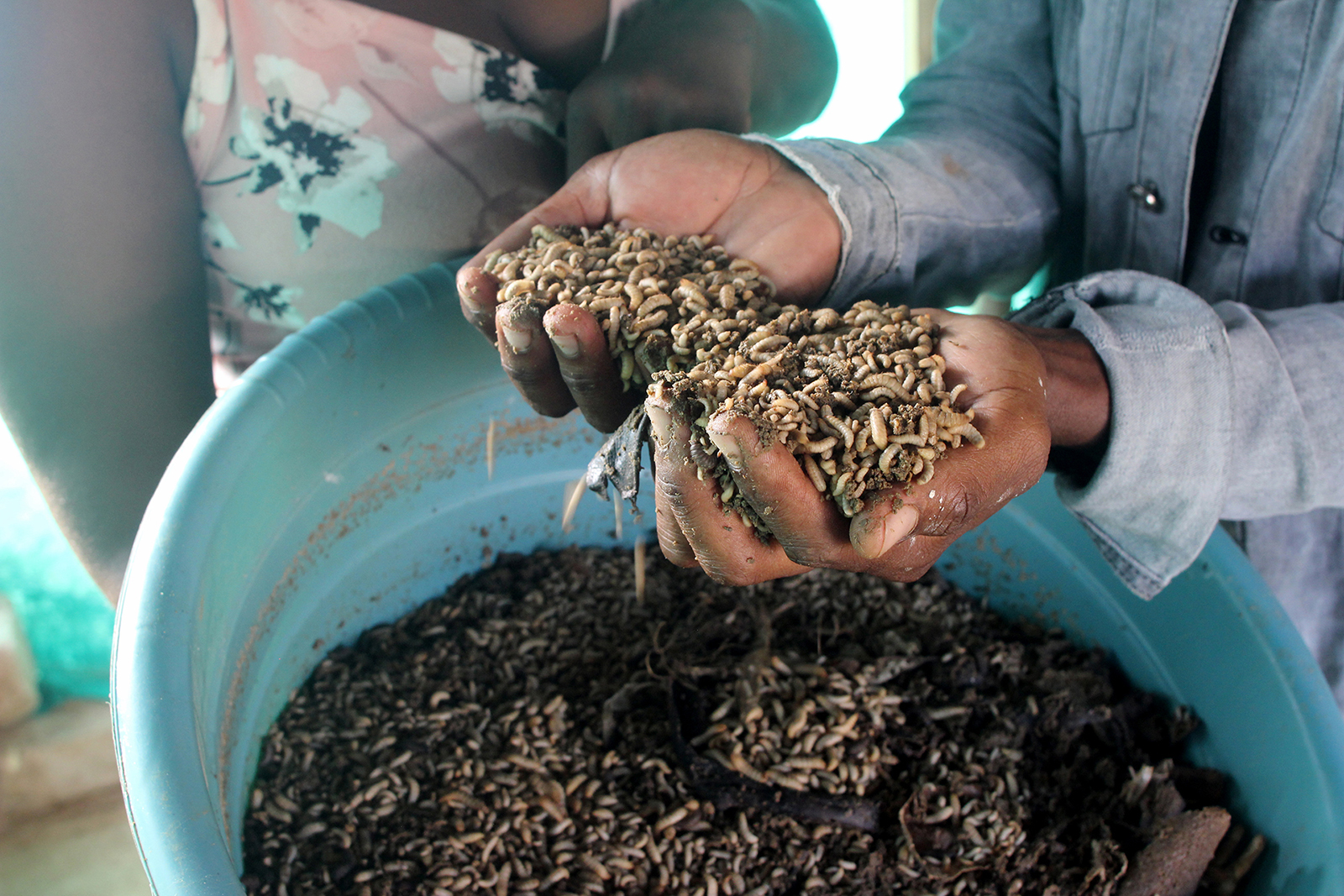
After hatching, the larvae are kept in a “growing” basket. These voracious eaters are then fed
organic waste until the larvae are large enough to be used as live feed or dried. Photo: Andries van Zyl.
Nothing goes to waste
True to their zero-waste philosophy, every part of the Black Soldier Fly cycle is used productively.
The larvae are fed to chickens and fish either fresh or dried. The frass is used for seedlings and vegetable beds, while leftover cocoons are also fed to poultry.
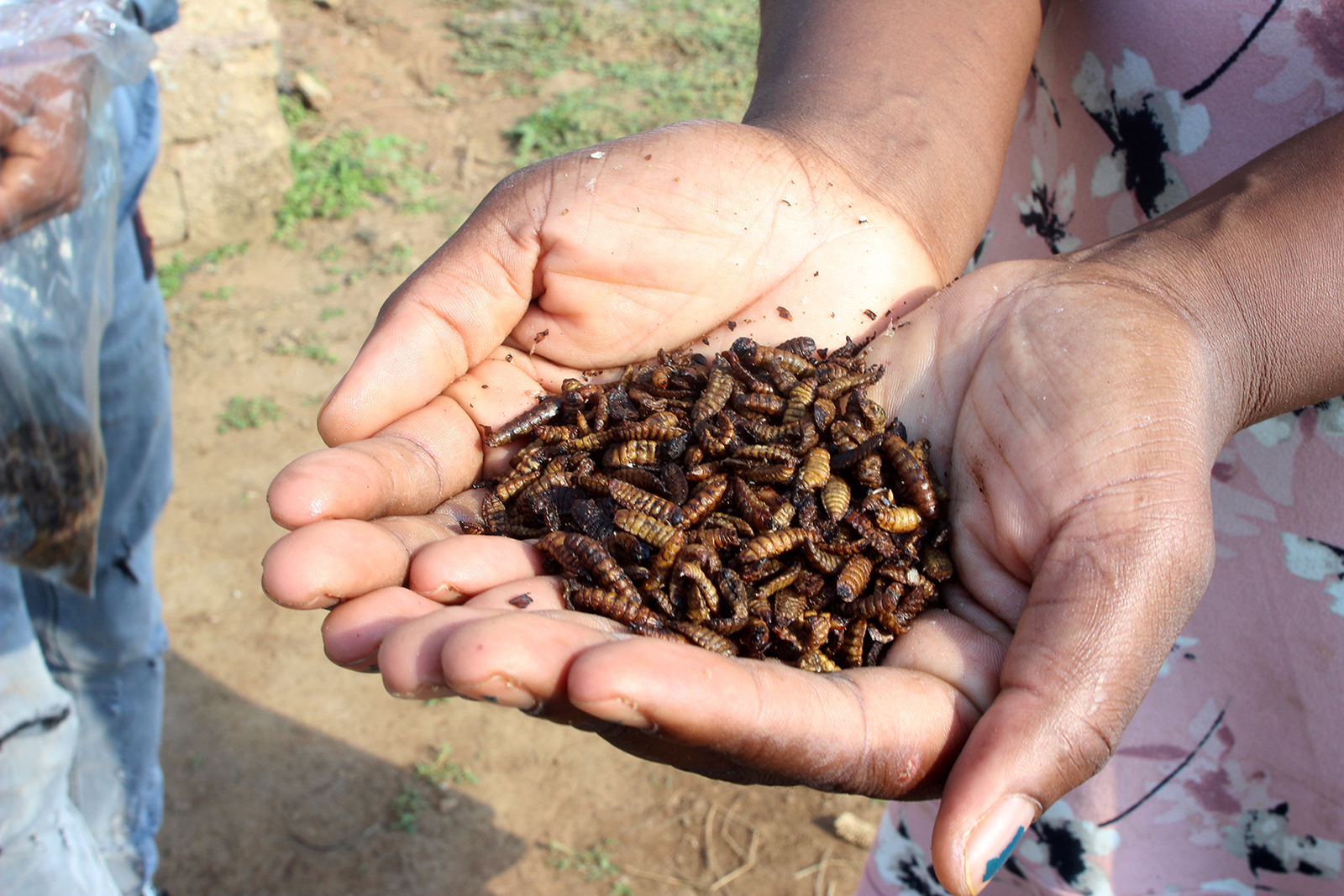
Tshisikhawe shows an example of the dried Black Soldier Fly larvae which they
use as animal feed. Photo: Andries van Zyl.
“Nothing goes to waste,” Tshisikhawe said.
The couple even produce their own homemade fish feed by mixing dried larvae with maize grown on the farm, eggs, indigenous vegetable extracts and flour.
“We are mostly into finding ways of producing our own food, homestead style, while eliminating as much cost as possible,” she explained.
Another environmental benefit is that Black Soldier Flies require virtually no water during their breeding cycle.
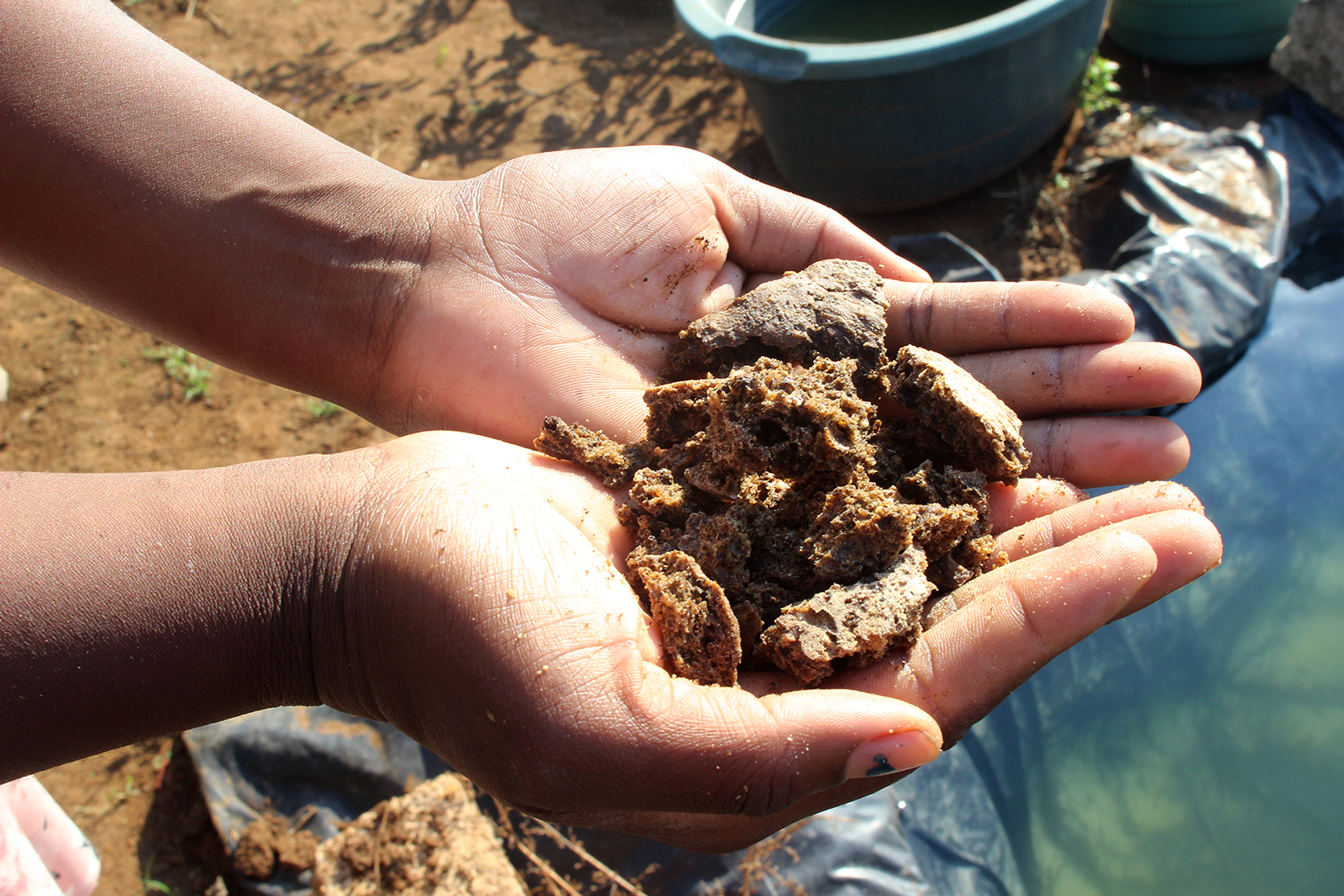
An example of the “cake” they feed the fish. It consists of a blend of indigenous vegetable extracts,
dried or oven-baked Black Soldier Fly larvae, organic chicken eggs, maize, and flour. Only the flour is bought.
They then bake the mixture in their oven and sun-dry it on hotter days before crumbling the “cake”
to feed the fish. Photo: Andries van Zyl.
Feeding the larvae with restaurant waste
One of the project’s most unique aspects is how it turns unwanted food waste into something useful.
A local restaurant business in Louis Trichardt supplies organic waste material to the farm, which is then fed directly to the larvae.
“We feed it directly to our soldier flies,” Tshisikhawe said. “It means we don’t spend money, apart from transportation.”
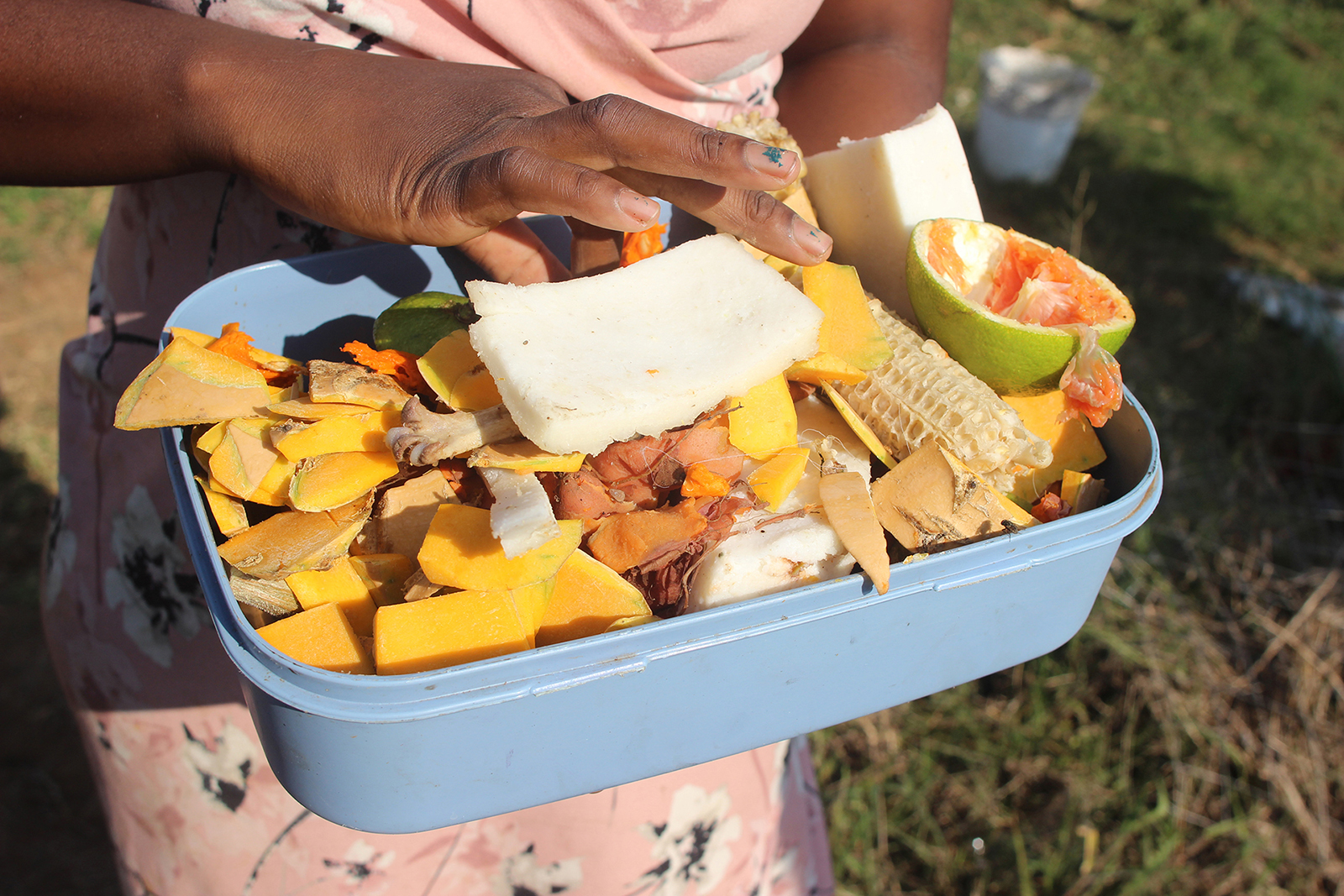
A typical example of the organic waste material fed to the larvae. Photo: Andries van Zyl.
Ironically, one of the couple’s biggest challenges is not having enough organic waste to satisfy the larvae’s enormous appetite.
“They eat literally everything,” she said. “Whatever you put inside the feeding basket, tomorrow you will not find it.”
The couple are now appealing to businesses and households to donate organic waste rather than sending it to landfill sites.
Training others and future expansion
The Maumelas believe Black Soldier Fly farming could help many other small-scale farmers reduce feed costs and become more sustainable.
“Everybody must start doing this,” Tshisikhawe said. “We have started training sessions. We want people to come and see how to do it.”
Part of their future plans include expanding their breeding facilities, improving ventilation and humidity control, and launching an online store for Pikani Harvest products.
Currently, they sell garlic, chilli peppers, chickens and dried larvae mainly through word of mouth.
Despite the project’s success, several obstacles remain.
Winter temperatures in the area can slow production, meaning the breeding area must be carefully monitored and sometimes heated with lamps. Space is also becoming limited as the project grows.
The couple also need more buckets for waste collection and, most importantly, a vehicle to transport goods and collect organic waste from businesses.
“We really need a vehicle to transport our goods, even to collect organic food waste from local businesses,” Tshisikhawe said.
A new generation of farmers
Tshisikhawe grew up in a farming family from Mangondi in the Punda Maria area and holds a bachelor’s degree in Recreation and Leisure Studies from the University of Venda. Her husband holds a diploma in administration.
Apart from farming, she is also a craft artist who creates art from waste materials, a content creator and a natural medicine practitioner.
Community response to the project has been overwhelmingly positive.
“People love what we are doing,” Tshisikhawe said. “There are not a lot of people in Africa doing this and it is a good initiative to see and be inspired by.”
For the Maumelas, the project is about far more than simply breeding insects. It is about building a farming system where waste becomes a resource, costs are reduced and sustainability becomes part of everyday life.
For more information, or for those who want to assist the Maumelas in their farming endeavours, Tshisikhawe can be contacted via email at tshisikhawemaumela@gmail.com. They are also available on TikTok, YouTube and Instagram.