
By Thembi Siaga and Maanda Bele
June marked 49 years since the 16 June 1976 Soweto Uprising, when thousands of young people rose up against an oppressive education system. They marched for dignity, equality, and a future worth living for.
Nearly five decades later, the youth of Vhembe District are still fighting — but now, the enemies are poverty, unemployment, drugs, and crime.
Across townships, villages, and rural communities, many young people say the promises of 1994 feel hollow. "We are told doctors are in high demand, yet more than 800 qualified doctors are unemployed. How does that make sense?" asked Hlulani Khosa, a Grade 12 learner from Waterval High School near Elim.
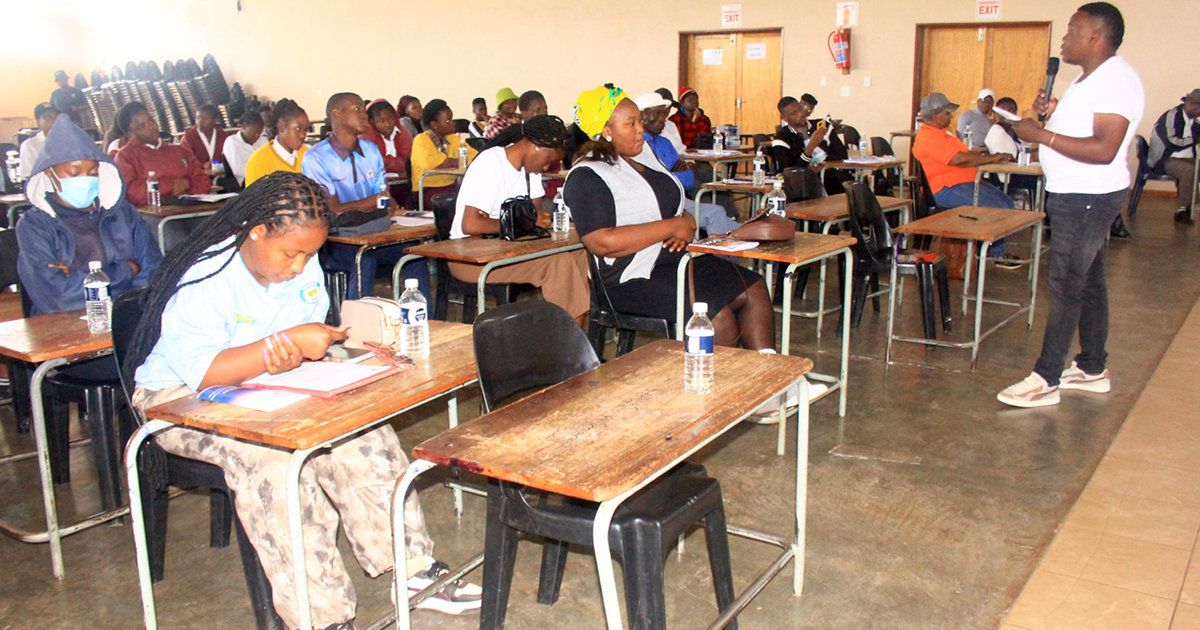
She was speaking at a 16 June commemoration and career-awareness event attended by some 50 learners from schools across the Elim area. The event was hosted by Vumbanani for Peace Building (VFP) in partnership with the University of Venda, Faranani Paralegal and Advice, and Makhado Municipality.
Youth unemployment dominated the discussions. According to Stats SA's latest Quarterly Labour Force Survey (Q1 of 2025), South Africa's unemployment rate stands at 32.9%, with Limpopo slightly higher at 33.3%. Youth unemployment (ages 15–34) is at 46.1%.
Learners were encouraged to view education not only as a path to employment but as a tool to build confidence and create opportunities. They were also urged to speak out against abuse — whether at school, at home, or in their communities. "Young people have been promised jobs for years," said Hlulani. "Some of our brothers graduated and still have no work. Others have business ideas but lose hope because everything is geared towards formal jobs. It takes courage to stay hopeful."
She also criticised the poor infrastructure at her school. "The toilets, windows, and even the offices are in bad condition. The school is not developed at all."
Other speakers urged young people to take initiative. Miyelani Maswanganyi, a master's student in road development at the University of Venda, said the youth should stop waiting for government solutions. "There are jobs — but it starts with us creating them," she said. "The government can't hire everyone. Going to school doesn't guarantee employment. We need to build and invest in our own communities."
Maswanganyi encouraged entrepreneurship: "If I start a business and employ 100 people, I've made an impact. I don't need to be in government to create jobs."
Tendai Chandigere from VFP said most rural learners lacked access to practical training. "Our education is too classroom-based. We need skills like welding, sewing, or construction — tools for self-employment."
"What's the point of freedom if you're still unemployed, broke, and depressed?" asked Tshilidzi Mulaudzi, a 25-year-old HR graduate from Vhembe TVET College.
While the youth of 1976 fought against Afrikaans being enforced as a medium of instruction, today's youth are fighting just to stay in school, avoid drugs and crime, and not be sexually assaulted or killed.
According to the latest crime statistics, Thohoyandou Police Station ranks first in the country for reported rape and sexual offences — a chilling reality for young women. More than 450 drug-related cases were reported in the district, along with hundreds of assaults, robberies, and murders — many involving young people.
"We're dealing with a generation that is traumatised, unemployed, and ignored," said Phillip Mathakha Mashau, a veteran of the 1976 uprising. He was part of the committee that led the Soweto protests, tasked with ensuring their memorandum of grievances was delivered. "Every generation has its struggles — whether it's bullying, teenage pregnancy, crime, or drugs. But we must face them head-on," said Mashau. "Start your own businesses. If you need support, there's the NYDA. We, the youth of 1976, helped establish that agency to address the challenges facing young people."
In Limpopo, youth unemployment is estimated at over 55%, with rural areas such as Vhembe the hardest hit. In towns such as Thohoyandou, Musina, and Malamulele, many graduates wander the streets — degrees in hand but no jobs in sight.
"My parents sacrificed everything to send me to varsity. Now I'm back home, broke, hustling airtime," said 27-year-old Rendani Mashamba from Lufule.
Behind the statistics lies a silent crisis: depression, anxiety, and suicidal thoughts among young people. Mental health services are scarce, and stigma remains strong.
"Boys are raised to suffer in silence. Until one day, they snap or disappear into drugs and alcohol," said Mulalo Netshifhefhe from Siloam, Nzhelele.
Crystal meth, alcohol abuse, and gang-related violence are destroying communities around Thohoyandou, Maniini, Ngovhela, Tswinga, and Shayandima. Young people are drawn in by boredom, peer pressure, and a lack of opportunities. "You watch your dreams die slowly, and eventually you just stop caring," admitted a former addict from Tswinga.
While the Class of '76 faced the brutality of apartheid, today's youth are bound by invisible chains — corruption, poor leadership, economic exclusion, and a broken education-to-employment pipeline.
"This is not the freedom we were promised. It's survival," said Takalani Netshisaulu (24) from Madombidzha.
"Government must stop treating youth empowerment as just a budget item. It's a crisis," warned Mashau.
Vhembe SAPS spokesperson W/O Vuledzani Dathi confirmed that most suspects in drug-related crimes are young people. "But when it comes to sexual offences," he added, "we've seen suspects from all age groups — it's not just the youth."
As we reflect on 49 years since the Soweto Uprising, one question remains: Are today's youth truly free?
The faces have changed. The uniforms have changed. But the cries for dignity, opportunity, and a future remain hauntingly familiar.
"We're not lazy. We're not entitled," said 23-year-old Thendo Ramovha from Hamutsha. "We're just tired of waiting."